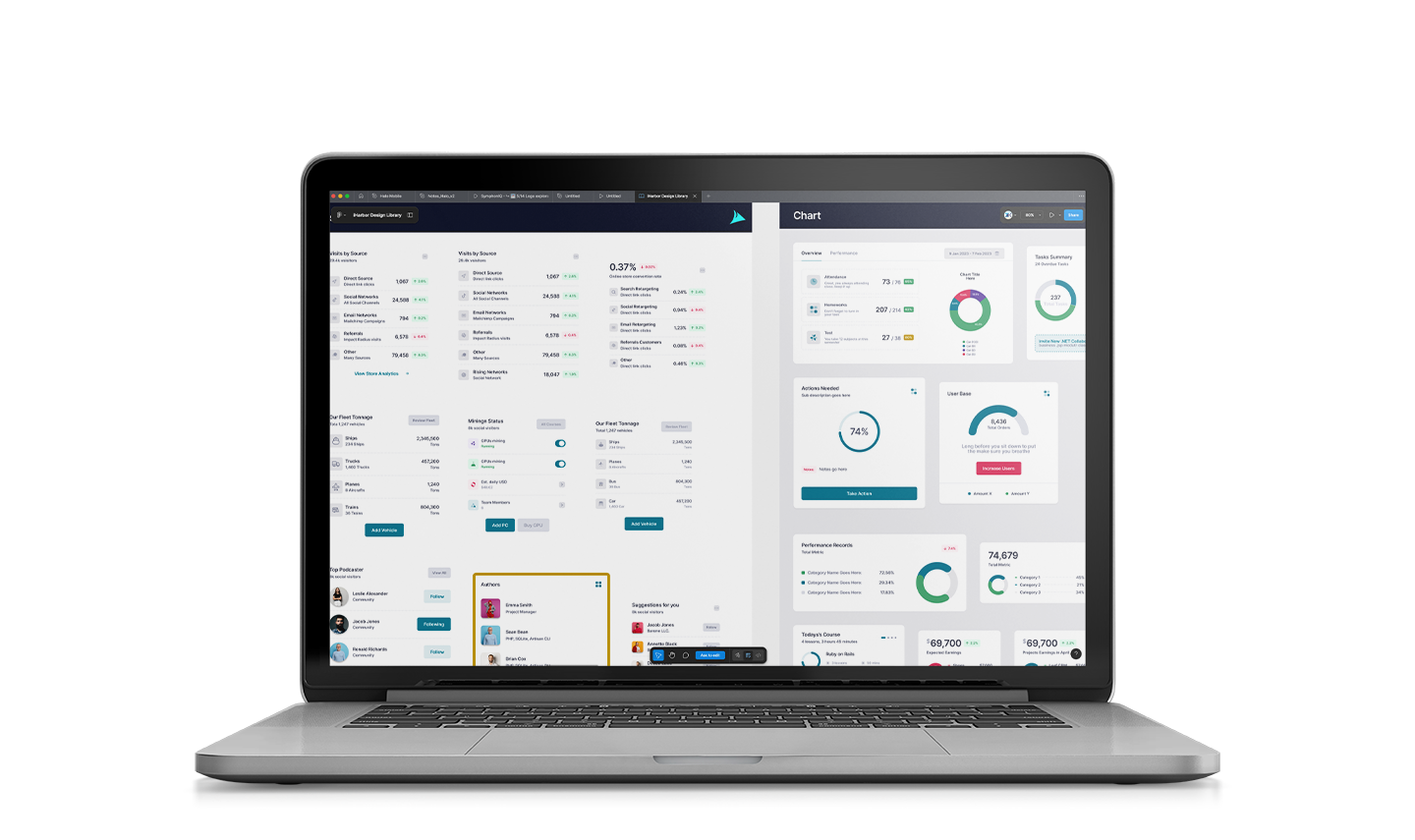
Built for:
iHarbor for the University of Maryland Medical System

The orthopedic implant management and analytics system eliminates manual processes and improves accuracy, efficiency, transparency, and cost savings.
iHarbor for the University of Maryland Medical System
UX, SaaS Product Design for Web & Mobile, Visual Design
Physician preference items (PPIs) are a major expense at most hospitals, accounting for 40-60% of supply costs. Because PPIs are subject to bill-only management, they require close tracking to ensure they are provided, consumed, billed, and paid for in a timely manner.
Unfortunately, the process is often tedious, manual, and prone to errors—and it is only expected to get worse as the demand and cost for these services increase.
Gallion takes many disconnected steps involved with most PPI purchases and payments, and consolidates them into one user-friendly application.
The result? Fewer errors. Less burden on staff. Faster payments. And access to contract benchmarking and analytics for improved long-term productivity.
iHarbor is an innovation studio that ideates and purposefully builds innovative digital health and artificial intelligence products and solutions.
As iHarbor’s principal Product and Visual Designer, I lead product and UX design. Building AI-driven digital health solutions to transform care delivery, enhance patient safety, and improve operational efficiencies across 11 hospitals and 150 offices.
Working in collaboration with users and the product team, I owned the UX process of transforming the manual billing process into intuitive digital workflows, greatly improving the overall experience for bill sheet process.

Vendors can easily generate an electronic bill sheet in real-time during a surgical procedure to ensure accurate bill-only supplies are included.

Perioperative staff receive confirmation by the end of a procedure that the bill sheet matches the EMR, so they can fix any discrepancies immediately.

Supply chain managers are notified if the billed amount doesn’t match the ERP contracted price, so they can make corrections before Gallion creates the purchase order.

Because errors are flagged during the process, billers have less downstream manual reconciliation, so they can manage a high volume of payments more efficiently.

Gallion compares your hospital’s contract prices for implants, PPI, and other bill-only supplies with market benchmarks, meaning more competitive future pricing opportunities with vendors.

With insights into case costs, waste, clinical outcomes, and more, executives gain better financial control of PPI and improved partnerships with clinicians.
To speed the dev process and increase visual consistency, I implemented the iHarbor design system and detailed directives for the development team.
In addition to Figma screens, I coded dynamic prototypes to test screens with users and achieve pixel-perfect end results.


Leaning on UX best practices and technical know-how, I designed intuitive, flowing experiences tailored to each unique user group and screen type.
There are designs tailored to the needs of in-hospital staff and doctors on the go.


I worked directly with data scientists to distill complex datasets and metrics into insights and easy-to-understand visualizations for a variety of users.
Gallion offers sophisticated evidence-based analytics with insights into case costs, waste, clinical outcomes, and more.


I designed the Gallion brand identity and corresponding marketing materials including, product sheets, pitch deck and content management system website.
The website serves as touchpoint for prospective customers as well as a lead generation tool for marketers.


Vendors can easily generate an electronic bill sheet in real-time during a surgical procedure to ensure accurate bill-only supplies are included.
Perioperative staff receive confirmation by the end of a procedure that the bill sheet matches the EMR, so they can fix any discrepancies immediately.
Supply chain managers are notified if the billed amount doesn’t match the ERP contracted price, so they can make corrections before Gallion creates the purchase order.
Because errors are flagged during the process, billers have less downstream manual reconciliation, so they can manage a high volume of payments more efficiently.
Gallion compares the hospital’s contract prices for implants, PPI, and other bill-only supplies with market benchmarks, meaning more competitive future pricing opportunities with vendors.
With insights into case costs, waste, clinical outcomes, and more, executives gain better financial control of PPI and improved partnerships with clinicians.
Gallion has created value in operational efficiency, captured cost savings, and increased margins since launching at UMMS.
Drop in bill sheet processing time
Time reduction from bill sheet submission to PO
Drop in bill sheet remediation
Drop in discrepant invoices
Annual hours saved by eliminating manual processes
Gallion was selected as a finalist in the Gartner Power of the Profession Supply Chain Awards 2025, in the Process or Technology Innovation of the Year category.






© Keith Leitch 2026
Driven by a passion for human-centered design and a problem-solving mindset, I craft intuitive digital products that not only look great but perform even better—delivering engaging experiences for users and positive outcomes for business.
First impressions are crucial in UX—they shape user expectations, trust, and behavior within seconds. Prioritizing clarity, aesthetics, and usability up front makes users more likely to engage and return. I work across design disciplines to deliver results.
With a career spent at the crossroads of design, marketing, and IT, I've had the opportunity to lead and contribute to a diverse mix of dynamic, high-impact projects.
From nimble start-ups and small businesses to Fortune 500 giants and U.S. Government agencies, my experience reflects a broad spectrum of challenges and strategic solutions.